Dongguan Aier Eye Hospital: One City, Three Hospitals and One Clinic, Part of a Global Network
 0769-22660023 0769-22660023
Remembering the Deceased on Qingming Festival: Great Love Brings Light
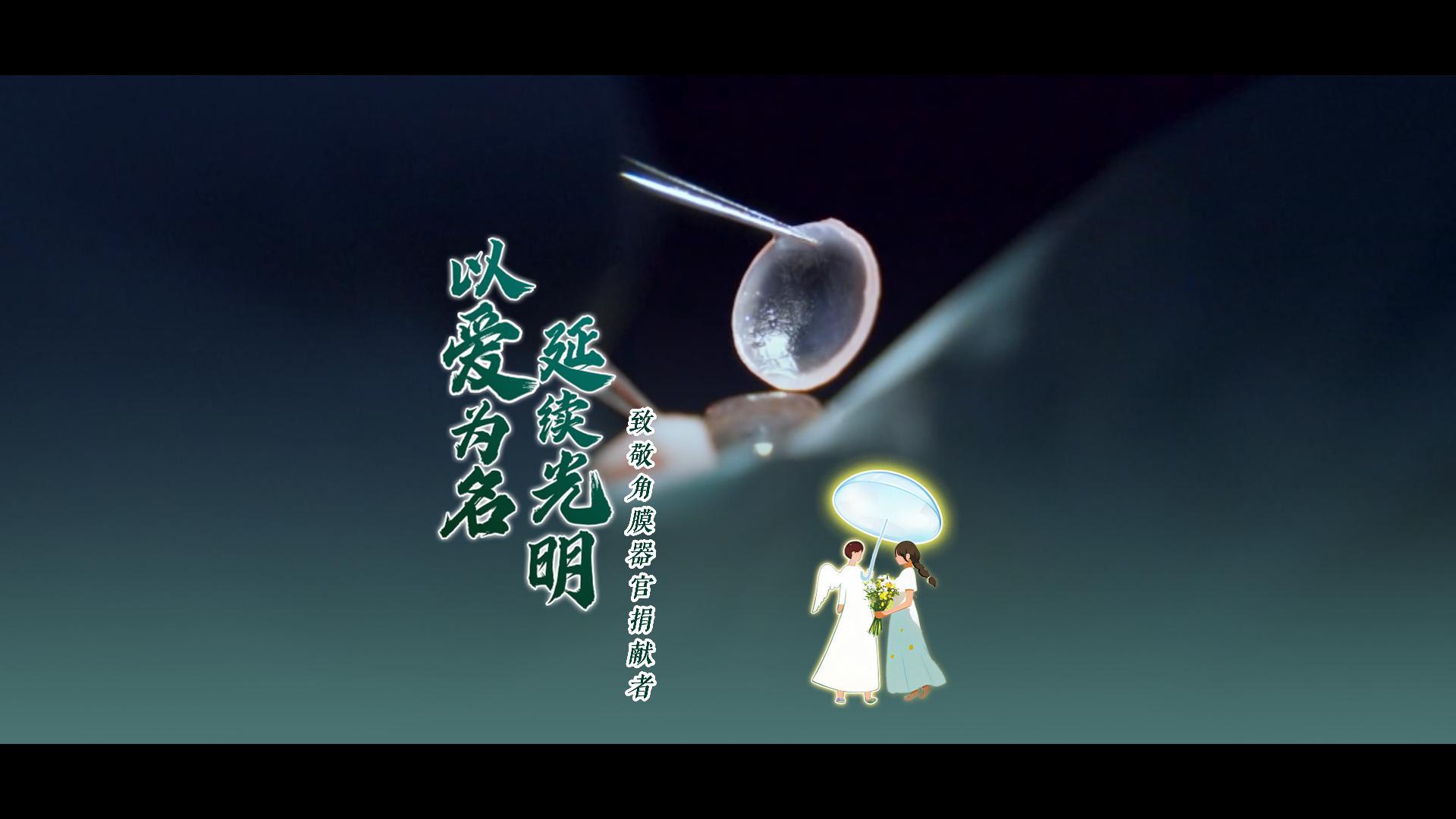
On this special day dedicated to honoring our ancestors and remembering the departed, we deeply cherish the selfless gifts of every corneal donor—they left behind a spark of light at the end of their lives, allowing patients suffering from corneal blindness to regain clear vision. The Cornea and Ocular Surface Department at Dongguan Aier Eye Hospital, through its exceptional medical expertise and warm compassion, transforms this gift that transcends life and death into countless miracles of restored sight. Let us pay our highest respects to all these “messengers of light.”
The cornea, located at the center of the eye’s front surface and only 0.5 millimeters thick, is the first critical structure in the visual process. It refracts light, focusing it on the retina to create clear vision. However, genetic factors, injury, or disease can cause this delicate, transparent tissue to become cloudy or scarred, ultimately leading to a sudden decline in vision or even blindness—a condition known as corneal blindness.
According to statistics, there are approximately 4 to 5 million patients in China who have lost their sight due to corneal disease, with over 100,000 new cases plunging people into darkness each year—yet fewer than 10,000 patients receive corneal transplants annually [1].
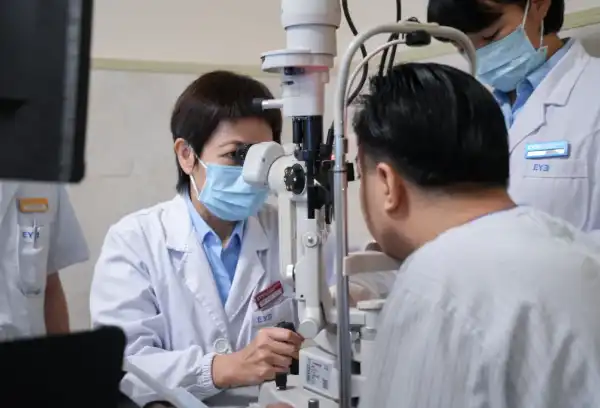
“Once corneal disease sets in, patients may face blindness if they do not receive timely treatment. Corneal transplantation is their only hope for regaining sight, and it also presents a tremendous challenge for us as doctors.” The words of Ye Jianzhang, Director of the Cornea and Ocular Surface Department at Dongguan Aier Eye Hospital, are imbued with a profound sense of responsibility.
Breaking the Donor Shortage: Ending the Long Wait
Against the backdrop of an average waiting time of over one year for corneal donors nationwide, Aier Eye Hospital in Dongguan has achieved the “Dongguan Speed” in corneal transplantation—typically arranging corneal transplant surgeries within four weeks.
This achievement is underpinned by the “Life Network” established by Aier Eye Hospital Group: leveraging 9 eye banks and 62 corneal collection stations, Aier Eye Hospital has built a nationwide system for corneal donation and allocation. Through a “bank-station collaboration” model, the group ensures the efficient collection, screening, processing, preservation, research, and distribution of corneal tissue, delivering safe, high-quality donor materials promptly to patients on the waiting list.
“Leveraging the robust resource platform of the Aier Eye Hospital Group and utilizing the ‘Tongju’ corneal donation and transplant scheduling system, we have integrated corneal resources, expert expertise, and the efforts of charitable organizations to effectively reduce donor waiting times and address the shortage of local corneal donations,” explained Director Ye Jianzhang.
Comprehensive Coverage of All Surgical Procedures to Treat Complex Corneal Diseases
As the first hospital in the Dongguan region to introduce femtosecond laser corneal transplantation technology (in 2016), Dongguan Aier Eye Hospital has consistently aligned itself with advanced domestic and international standards in the diagnosis and treatment of corneal diseases, particularly in the field of corneal transplantation.
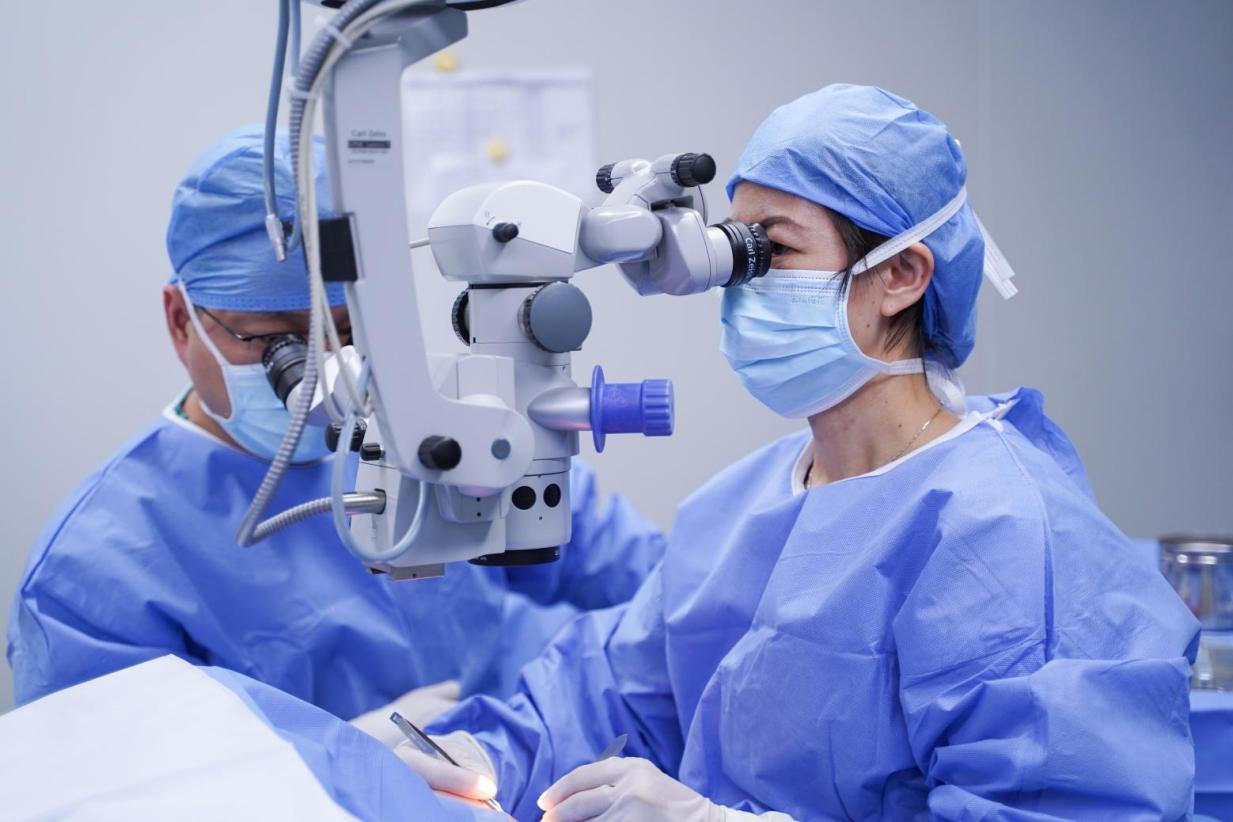
Currently, the hospital performs all types of corneal transplant surgeries, including femtosecond laser-assisted corneal transplantation, penetrating keratoplasty, deep lamellar keratoplasty, DSEK (deep stromal endothelial keratoplasty), DMEK (dorsal stromal endothelial keratoplasty), amniotic membrane transplantation, ocular surface reconstruction, and complex corneal transplant surgeries; Additionally, the hospital has introduced a cross-linking system, enabling the performance of corneal cross-linking procedures. This benefits patients with keratoconus and certain infectious corneal conditions by strengthening their thinned corneas and halting the progression of corneal disease.
“Corneal transplantation is a delicate and complex surgical procedure that requires doctors to possess exceptional technical skills and profound medical knowledge.” The fact that there are only about a hundred doctors nationwide capable of performing corneal transplants underscores just how high the technical barriers are.
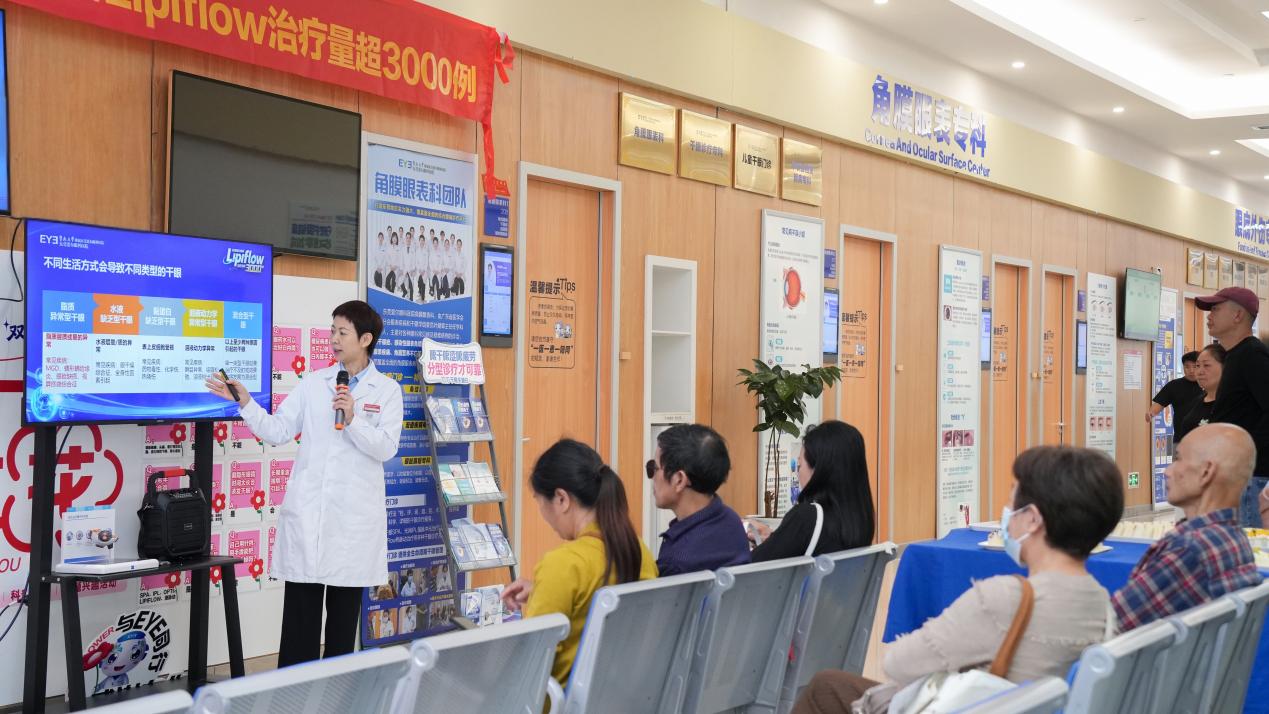
The Cornea and Ocular Surface Department at Dongguan Aier is led by Director Ye Jianzhang, a member of the Ocular Surface Diseases and Dry Eye Study Group of the Guangdong Ophthalmological Society, and features Professor Zhou Shiyou as a special guest who regularly sees patients and performs surgeries. The department has assembled a team of highly experienced and professional medical staff, currently comprising one Chief Physician, three Associate Chief Physicians, and one Attending Physician, including two with master’s degrees. They are dedicated to establishing a leading center for the diagnosis and treatment of corneal and ocular surface diseases in the Dongguan region.
Charitable Initiatives: Lighting the Way to Hope for Patients with Corneal Blindness
In addition to the shortage of corneal donors, the high cost of surgery—often running into tens of thousands of yuan—poses a significant challenge for many families of patients with corneal blindness.
To fulfill its mission of “ensuring everyone, regardless of wealth, has the right to eye health,” Dongguan Aier Eye Hospital has launched several public welfare initiatives in recent years, including the “You Are My Eyes: Corneal Transplant Charity Campaign” and the “Keratoconus Charity Project.” These initiatives provide high-quality medical services and surgical subsidies to patients who meet the eligibility criteria.
Currently, public welfare projects related to corneal blindness are still underway, providing financial assistance to low-income patients in need of surgical treatment. Eligible patients may receive up to 5,000 yuan for corneal collagen cross-linking surgery and up to 10,000 yuan for corneal transplant surgery, depending on their specific circumstances and the type of procedure.
By pooling resources from various sectors of society, an increasing number of patients with corneal blindness have gained access to surgery. However, as Director Ye Jianzhang noted, “This is still far from enough.”
To keep the light of sight alive, we need more people to join the cause.
Qingming is a time for remembrance, but also a time for gratitude. It is precisely those ordinary people who choose to donate their corneas—through the final gift of their lives—who have lit the flame of rebirth for those in despair.
“We urge more people to join the ranks of corneal donors and train more corneal transplant surgeons, so that together we can bring light to this darkness,” Director Ye Jianzhang appealed. This is a relay of light that requires the participation of the entire society. We hope more people will learn about and support the cause of corneal donation, so that this relay of love can help more patients with corneal blindness emerge from the darkness and embrace hope.

咨询电话:
0769-22660023
医院地址:
东莞市东城区莞樟路石井路段171号-东莞爱尔眼科医院