Dongguan Aier Eye Hospital: One City, Three Hospitals and One Clinic, Part of a Global Network
 0769-22660023 0769-22660023
You look in the mirror this morning and suddenly notice a small bump on your eyelid.
It even feels a little uncomfortable when you touch it.
Is your first thought that you have a stye?
Are you tempted to squeeze it out or apply an anti-inflammatory ointment right away?
Don’t panic just yet!
A small bump on your eyelid isn’t always a stye.
Another condition that’s often confused with it is a chalazion!
At first glance, both look like “lumps,”
but their causes, symptoms, and treatments are worlds apart.
Getting them mixed up isn’t just a waste of time—it could actually make things worse!
Image
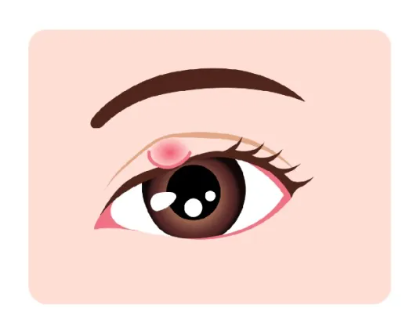
Let’s start with the most familiar one: a stye, commonly known as a “stye,” which is definitely an “acute inflammatory condition” of the eye.
It’s an acute suppurative inflammation caused by a Staphylococcus infection of the eyelash follicle or meibomian gland—in simple terms, it’s an inflamed, pus-filled bump on your eyelid.
Under no circumstances should you squeeze it with your hands!
The blood vessels in the eyelid are connected to those inside the skull. Squeezing it carelessly can spread the infection, leading to eyelid cellulitis at best, or even a cavernous sinus abscess at worst—and that’s no small matter.
The correct approach is to apply warm compresses early on, combined with antibiotic eye drops and ointment. Once the pus has matured, have a doctor professionally incise and drain it; symptoms usually improve within a few days.
Image
As for chalazia, medically known as meibomian cysts, they are practically “quiet little bumps” compared to styes.
It is not caused by infection, but rather by a blockage of the meibomian gland duct. The oil secreted by the gland cannot be expelled, so it accumulates within the eyelid and irritates the surrounding tissue, forming a sterile, chronic granuloma. Simply put, it’s a “clogged oil sac” in the eyelid.
When a chalazion first develops, you may not feel anything—you might only notice it when you touch it. Larger ones can cause a slight sensation of heaviness or fullness in the eyelid. If the lump ruptures, it may form a granuloma inside the eyelid, creating a sensation of something “rubbing against the eye.”
In the early stages, antibiotics are not necessary; the key treatment is warm compresses combined with massage. Apply a warm towel (around 40°C) to the eye for 10–15 minutes, 3–4 times a day, and perform meibomian gland massage to help drain the blocked oil. Small chalazia usually resolve on their own.
If the lump is too large or warm compresses are ineffective, a doctor may administer a corticosteroid injection to promote absorption, or perform a minor surgical procedure to scrape it out; recovery after surgery is usually quick.
Here’s an important point to note: chalazia and styes can actually “transform into one another”!
If a chalazion is left untreated for a long time, it can develop into a stye following a secondary infection; conversely, after a stye heals, the surrounding tissue may organize and form a capsule, potentially leading to a chalazion.
We also want to remind you that whether on the upper or lower eyelid, if you notice an unusual lump that isn’t painful or itchy—especially one that keeps growing or develops an ulcer and bleeds—you must be particularly cautious, as this could be a sign of a malignant tumor.
Therefore, if you notice a “lump” on your eyelid, we recommend seeking prompt examination at a professional ophthalmology clinic to determine the cause and receive appropriate treatment.
If you have any questions about styes or chalazia, feel free to leave a comment below!

咨询电话:
0769-22660023
医院地址:
东莞市东城区莞樟路石井路段171号-东莞爱尔眼科医院