Dongguan Aier Eye Hospital: One City, Three Hospitals and One Clinic, Part of a Global Network
 0769-22660023 0769-22660023
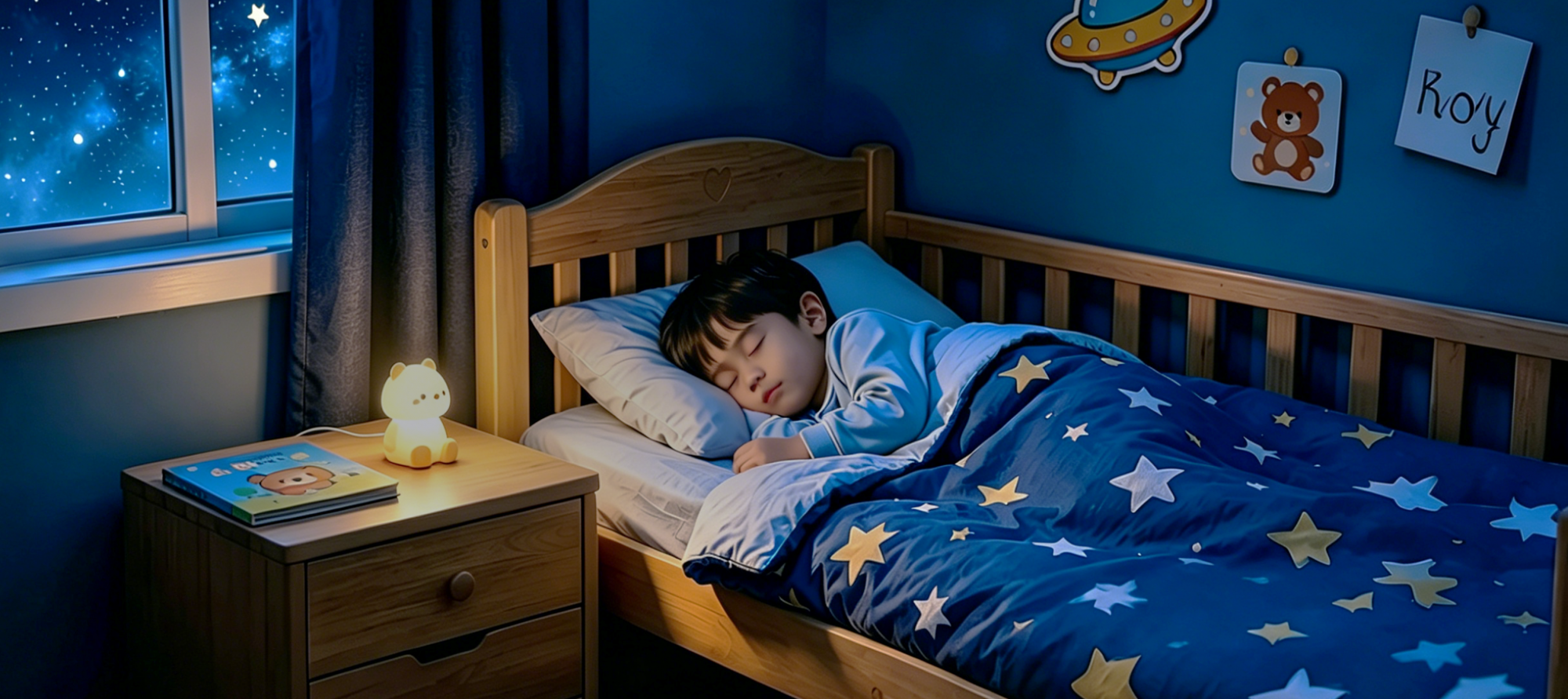
Do you often leave a night light on for your child at night?
Many parents leave a small night light by their child’s bedside, worried that their child is afraid of the dark and won’t dare to fall asleep alone, or that they might bump into things when getting up in the night. We always feel that this tiny, dim light is gentle and harmless to our children.
However, a recent authoritative study has given us a wake-up call: this seemingly heart-warming night light may be quietly damaging your child’s eyesight.
Recently, a team led by Academician Wang Ningli and Professor Li Shiming from Beijing Tongren Hospital, in collaboration with a team led by Researcher Song Yi from Peking University, published a groundbreaking study. The findings have sent shockwaves through households everywhere: prolonged exposure to dim light at night is a major environmental factor in the development of myopia in children.
This is not alarmist rhetoric, but a conclusion published in a reputable academic journal. Today, speaking as an optometrist, I’ll break it down for you in simple terms.
Dim light at night is more harmful to the eyes than we imagine
First, let me summarise what the study actually says.
This is a robust study conducted in three stages: first, animal experiments; second, a large-scale population survey; and finally, a one-year follow-up study focusing on children.
The conclusion, in a nutshell: sleeping with the lights on at night makes children more prone to developing myopia, and the risk is far greater than we imagine. The study also provides several clear and clinically relevant findings that parents must bear in mind:
If the average brightness throughout the night exceeds 10 lux (roughly the brightness of a standard bedside night light, or even dimmer than a mobile phone’s night mode), a child’s risk of developing myopia is 2.4 times higher than in a normal environment. This risk remains highly significant even after controlling for confounding factors such as age, sleep duration and daytime outdoor activity.
The period 2–4 hours after falling asleep at the weekend is a sensitive phase for a child’s eye development; even as little as 1 lux of light (such as light seeping through a door crack from a corridor lamp, streetlights filtering through curtain gaps, or the small red light on a charger) can still increase the risk of myopia.
Children in primary school (aged 6–12) are the most vulnerable. During this stage, the eyeball is ‘growing’, the axial length has not yet stabilised, and their response to night-time light exposure is far more sensitive than that of adults. Furthermore, staying up late at weekends further amplifies this harm, doubling the risk of myopia.
You might ask: ‘Can such a small amount of light really have such a significant impact?’
The answer is: yes.
Why can this small amount of light ‘lengthen’ a child’s eye axis?
The growth of our eyeballs is governed by a precise biological clock. It should be light during the day and dark at night—this is a rule written into our genes by hundreds of thousands of years of evolution.
The retina contains a special type of photoreceptor cell that is specifically responsible for ‘telling the brain whether it is day or night’. These cells are particularly sensitive to a substance called melanopsin, and are most sensitive to blue light (such as the cool white light most commonly found in night lights).
When the night should be pitch black, if you leave a night light on for your child—even if it is very dim—melanopsin is activated, and the brain receives the signal: “Hang on, is it morning?”
Consequently, the natural slowing of eye growth that should occur at night is disrupted, and the eye’s axial length is forced to “work overtime”. For every additional millimetre the eye axis lengthens, myopia worsens by 250–300 degrees. Moreover, once the eye axis has lengthened, this cannot be reversed; it will gradually progress from pseudomyopia to true myopia, and may even develop into high myopia, creating a risk of retinal detachment, glaucoma and other retinal diseases.
Put simply: when light is present at night when it shouldn’t be, the eyes ‘grow out of control’, and that is how myopia develops.
Scientific Eye Care: Creating a ‘Completely Dark’ Sleeping Environment for Children
Control night-time light sources: Avoid using night lights where possible; if they are essential, opt for motion-sensor models. If using a fixed night light, position it well away from the bed and ensure it does not shine directly on the face.
Create a completely dark environment: Use blackout curtains and door draught excluders to block out external light, and identify and eliminate hidden light sources in the bedroom (such as charger indicator lights, digital clocks, socket indicator lights, etc. cover them with black tape) to ensure the sleeping environment is as close to pitch black as possible.
Day-and-Night Eye Care: Darkness at night, light during the day. Ensure at least two hours of outdoor activity daily to allow the eyes to ‘calibrate’ their circadian rhythm under ample natural light; avoid mobile phones and tablets for one hour before bedtime, as blue light is what rhodopsin is most sensitive to.
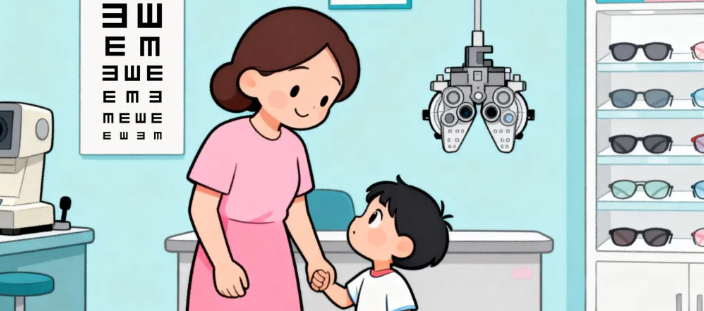
Regular vision monitoring: Take your child for an eye examination every 3–6 months to measure axial length and establish a personalised refractive development profile. The period between 6 and 12 years of age is the golden window for intervention; early detection and early intervention are key to managing myopia.
Advice from an optometrist: How to protect your eyes whilst sleeping
Night lights may be cosy, but for the developing eyes of a child, the darker the night, the safer it is. Once myopia becomes established, it is irreversible; once the eyeball has elongated, it cannot return to its original state.
Let’s not allow our care to become a hidden threat to our children’s eyesight. Starting tonight, providing your child with a completely dark bedroom is the simplest and most effective way to prevent and control myopia.
If you are unsure whether your home lighting is safe, or if your child is already showing signs of squinting or leaning in to see things clearly, do not wait – book an appointment at an optometry clinic straight away.
Dongguan Aier Eye Hospital:Professional Care, Scientific Myopia Prevention
Simply ‘turning off the lights’ is not enough to protect your child’s eyesight. At Dongguan Aier Eye Hospital, we are committed to using our professional expertise to serve as a strong support for parents in safeguarding their children’s vision:
A team of experts led by PhD and Master’s degree holders: The optometry and paediatric ophthalmology team is led by Director Fu Chengbin and comprises a highly qualified, skilled and professional “PhD and Master’s team” (including one PhD and three Master’s degree holders). They understand the characteristics of children’s visual development as well as parents’ concerns, and can devise personalised prevention and control plans tailored to each child’s age and degree of myopia.
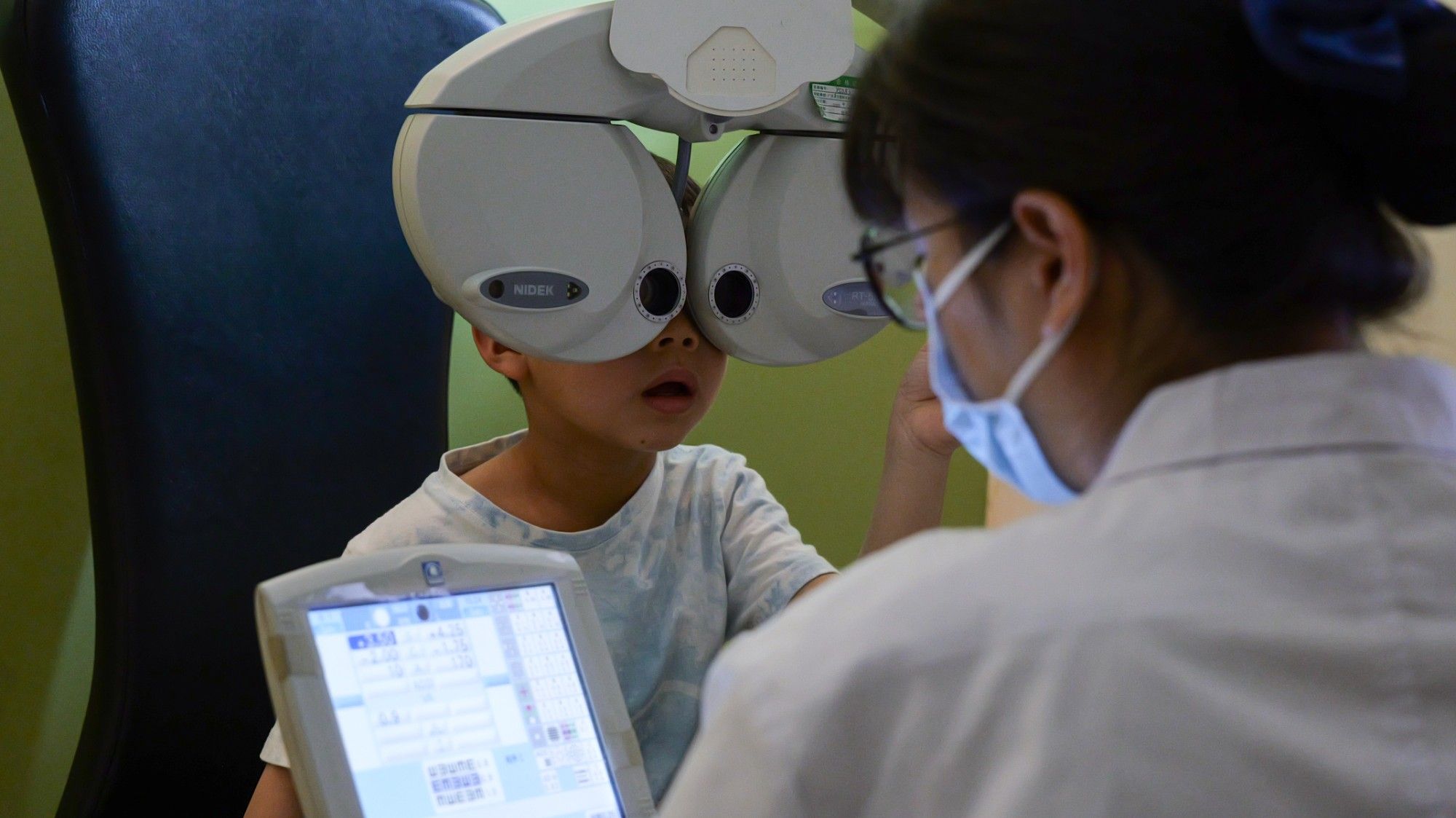
Comprehensive and precise diagnostic equipment: The hospital is equipped with state-of-the-art instruments, including axial length measurement devices and corneal topographers, which can accurately measure key indicators such as axial length and refractive error in children. We create a personalised refractive development profile for each child, monitor their eye development throughout the process, identify the risk of myopia at an early stage, and promptly notify parents.
Diverse, personalised intervention programmes: Tailored to each child’s individual circumstances, we offer a range of prevention and control options—including non-spectacle solutions, where clear vision is achieved during the day following overnight wear; and spectacle-based solutions, suitable for younger children, which are comfortable to wear and scientifically designed to slow the progression of myopia, providing comprehensive protection for your child’s eyesight.
儿童正接受眼表分析仪检查
Preventing and controlling myopia hinges on attention to detail and consistency; do not let a night light become a potential risk factor for your child’s eyesight. We recommend taking your child for a regular eye examination to establish a record of their refractive development, ensuring early monitoring and intervention to safeguard their clear vision.

咨询电话:
0769-22660023
医院地址:
东莞市东城区莞樟路石井路段171号-东莞爱尔眼科医院