Dongguan Aier Eye Hospital: One City, Three Hospitals and One Clinic, Part of a Global Network
 0769-22660023 0769-22660023
“Director Wang, I’m counting on you to perform the surgery again! Last time, I timed it—it was over in exactly 600 seconds, and the whole process put me completely at ease!” Mr. Xie recently visited Director Wang Hu’s clinic and said earnestly. Having experienced the hospital’s efficient and comfortable surgical care earlier, he couldn’t praise the doctors’ medical skills highly enough.
Mr. Xie has a history of hypertension spanning over 20 years and diabetes for three years. He had previously been diagnosed with central retinal vein occlusion in his left eye, leaving his vision in that eye at just 0.02. He could barely see objects in front of him, and everyday activities such as walking, recognizing people, and reading had become difficult.
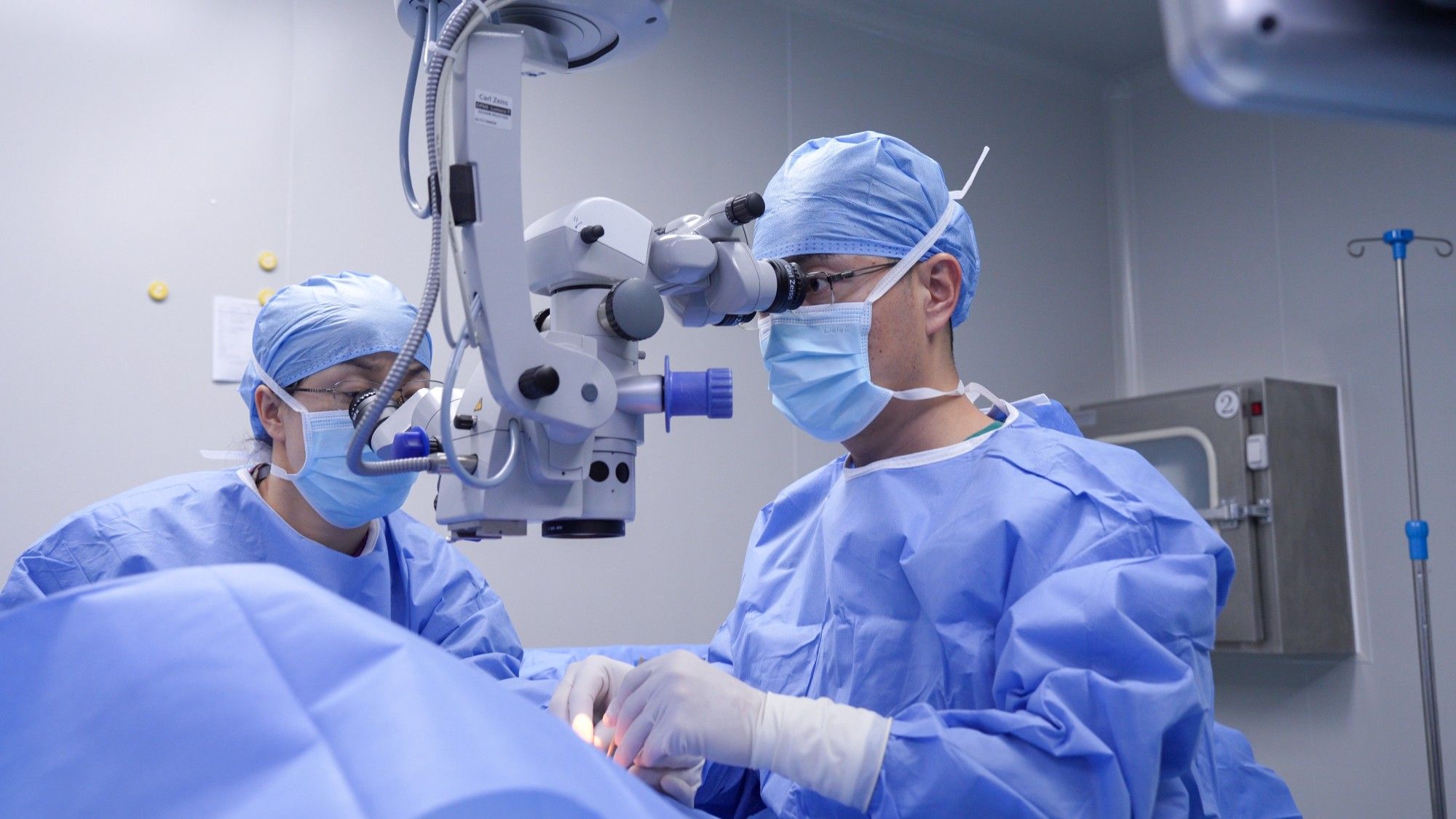
Last October, Mr. Xie sought out Director Wang Hu, drawn by his reputation, in the hope of improving his eye condition. After completing all necessary examinations, Director Wang Hu personally performed a combined procedure on Mr. Xie’s left eye, consisting of a vitreous drug injection, phacoemulsification and aspiration for cataract removal, and the simultaneous implantation of an intraocular lens. The entire combined surgery took just 9 minutes—a duration that closely matched the 600 seconds Mr. Xie had silently counted while on the operating table.
Recalling the surgical experience, Mr. Xie remains deeply impressed to this day. “It’s natural to feel nervous during surgery. I’d heard that counting could help distract me, but I never expected that by the time I reached 600 seconds, the doctor would announce that the surgery was over.”
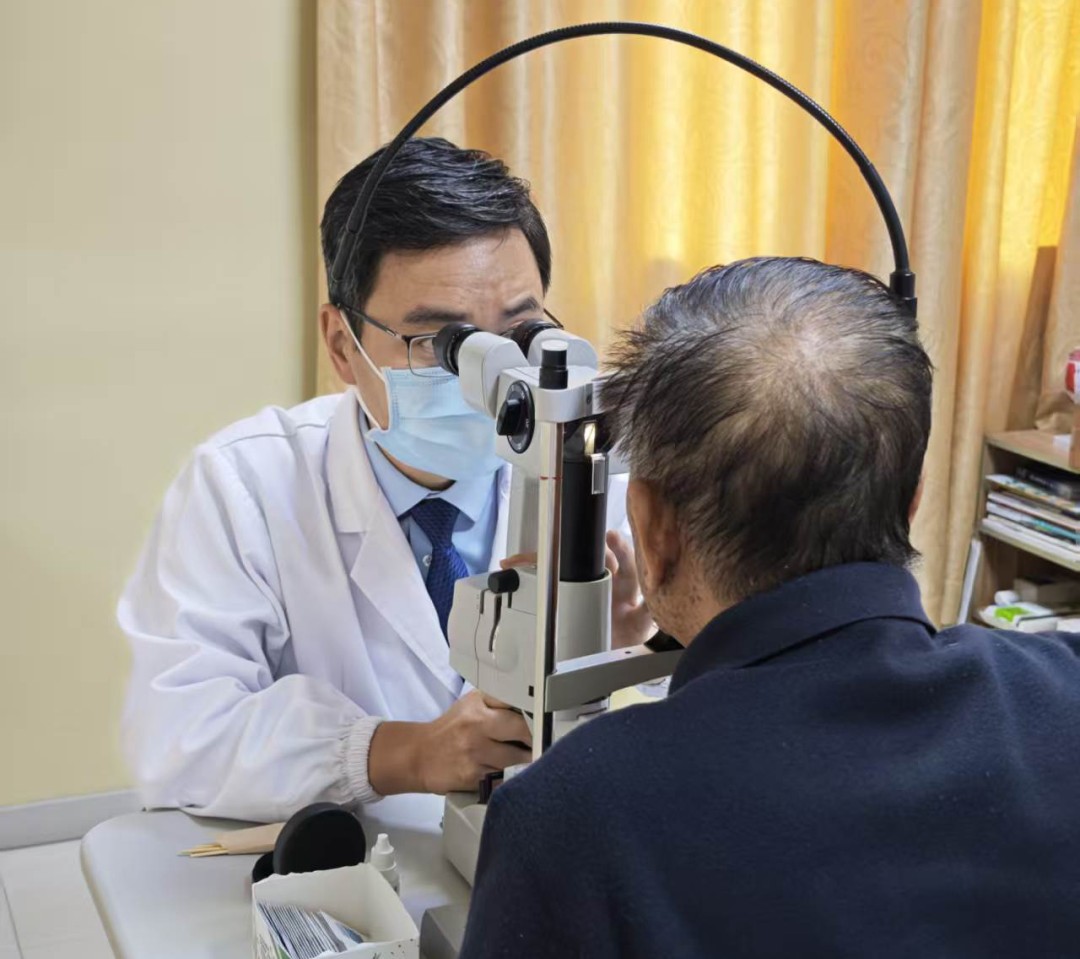
In early March, Mr. Xie returned to the hospital due to worsening macular edema in his left eye. After a thorough examination, he was diagnosed with retinal vein occlusion in the left eye accompanied by macular edema, requiring another course of intravitreal injection therapy.
Upon learning of his condition, Mr. Xie immediately requested that Director Wang Hu perform the surgery again. This trust stemmed from his previous positive experience with the highly efficient procedure. After completing the preoperative examinations that day, Director Wang Hu performed a vitreous drug injection (intravitreal dexamethasone implant) on his left eye. The entire procedure took only 4 minutes, and he was discharged the same day.
What makes the surgery “fast yet steady, precise yet meticulous”?
In ophthalmic clinical practice, vitreous injection combined with cataract surgery is a routine procedure that demands extremely high precision. For most doctors, performing this combined procedure typically takes 20–35 minutes, while a single vitreous injection procedure requires over ten minutes. However, Director Wang Hu is able to complete the combined procedure in under 10 minutes and a single injection in just 4 minutes—a feat made possible solely by his exceptional expertise and technical proficiency.
Led by Director Wang Hu, the Dongguan Regional Retinal Disease Team at Aier Eye Hospital performs over 2,000 surgeries annually. With outstanding professional expertise and extensive clinical experience, the team has achieved surgical procedures that are “fast yet steady, precise yet meticulous.” The significant reduction in surgery duration ultimately benefits patients, as it minimizes irritation to the operated eye and facilitates a smoother postoperative recovery.
As people’s quality of life improves, the number of patients with chronic conditions such as hypertension and diabetes is increasing year by year. Consequently, retinal vascular diseases resulting from these conditions—such as diabetic retinopathy and retinal vein occlusion—are also on the rise. Symptoms like macular edema and choroidal neovascularization have become the primary threats to the eye health of middle-aged and elderly individuals.
Director Wang Hu noted that intravitreal injection, as a “routine procedure” for treating retinal diseases and a crucial means of preserving vision, is applicable to conditions such as macular edema, choroidal neovascularization, and retinal neovascularization caused by various factors. It can effectively alleviate retinal lesions and protect patients’ vision.
Key Point: Do Not Stop Intraocular Injections Prematurely
Director Wang Hu reminds patients: Doctors will develop treatment plans based on the specific condition and follow-up findings of each patient with retinal disease. A typical course of treatment consists of 3–5 injections. Patients must adhere to their doctor’s instructions and complete the full course of treatment; arbitrary interruption may lead to a relapse of the condition and hinder optimal visual recovery.
To better serve patients with retinal diseases, Dongguan Aier Eye Hospital has established a dedicated “Intraocular Injection Center,” creating a standardized, one-stop outpatient treatment system that enables patients to be admitted, treated, and discharged on the same day. After the injection procedure, patients need only remain under observation at the hospital for approximately two hours; if no abnormalities are detected, they may return home to rest, significantly reducing both the time commitment and treatment costs for patients.
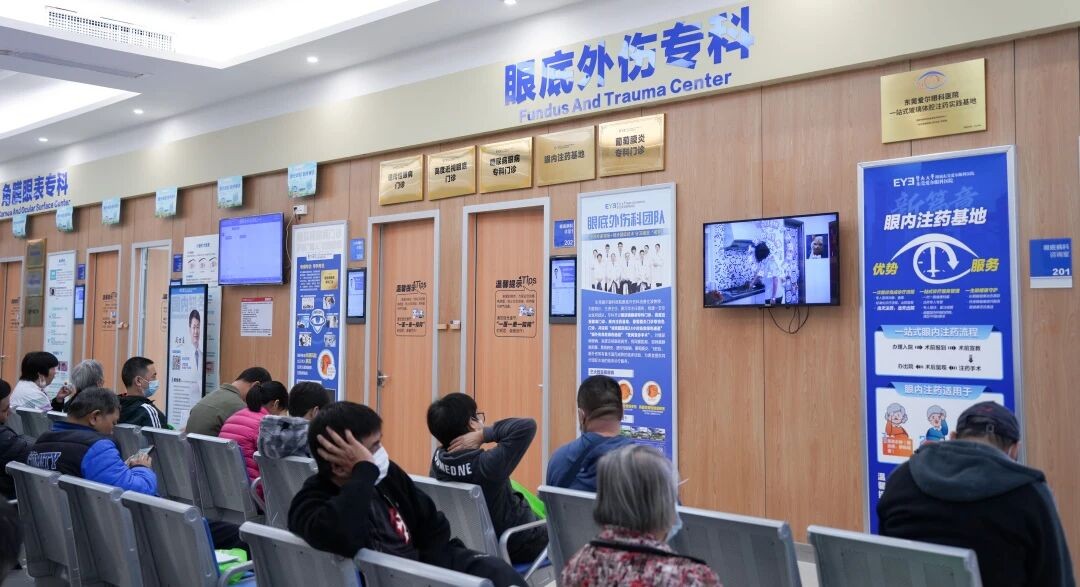
At the same time, the hospital has established a comprehensive system for regular follow-up visits for patients who have received injections, continuously monitoring their postoperative recovery to ensure their eye health. Currently, the hospital has formed a specialized injection team led by Director Wang Hu, with Dr. Ouyang Zhenglong, Dr. Huang Hehua, and others serving as key members. All team members possess extensive clinical experience. The department achieves an average treatment cycle of less than 24 hours from admission to discharge, providing efficient, convenient, and high-quality medical services. Through their exceptional technical skills, efficient treatment, and attentive care, they have earned widespread praise and recognition from patients.

咨询电话:
0769-22660023
医院地址:
东莞市东城区莞樟路石井路段171号-东莞爱尔眼科医院