Dongguan Aier Eye Hospital: One City, Three Hospitals and One Clinic, Part of a Global Network
 0769-22660023 0769-22660023
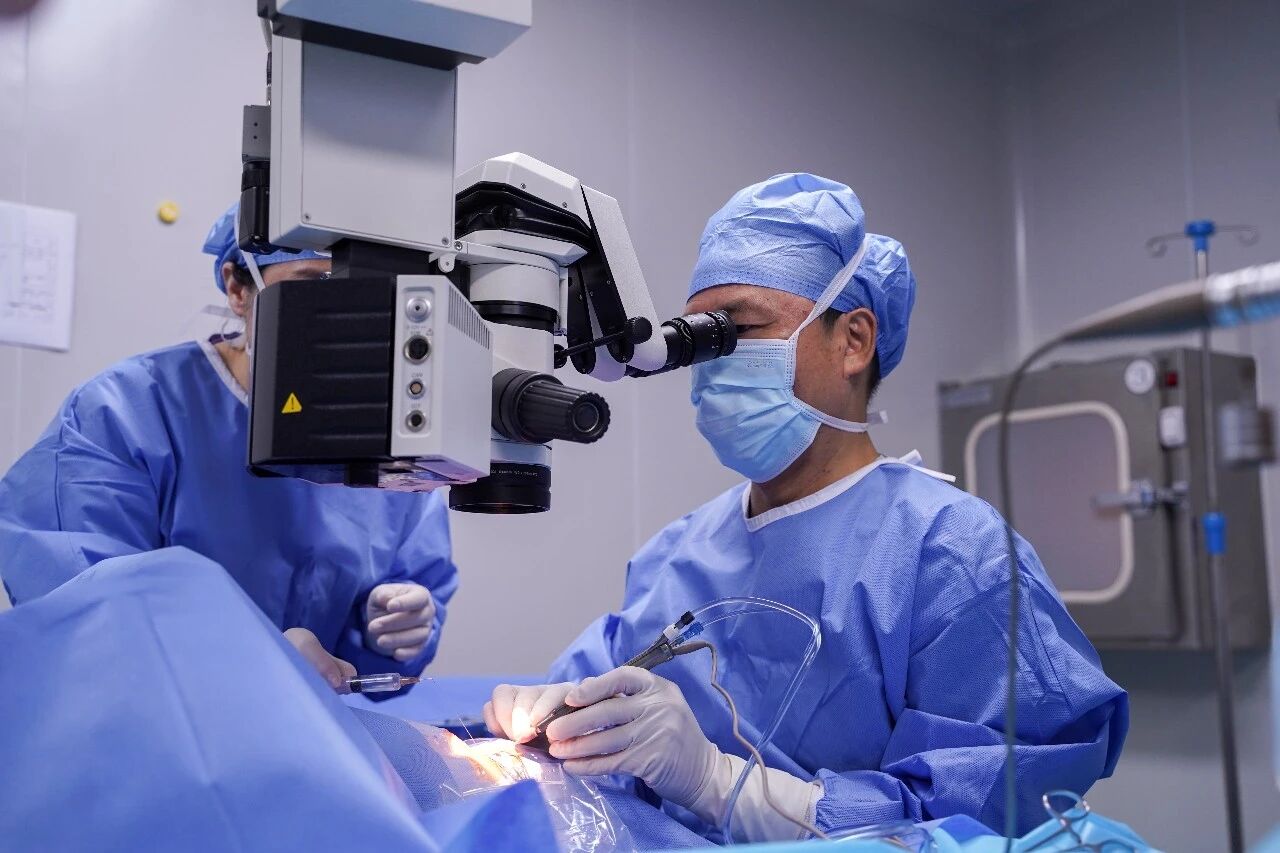
Recently, Dr. Liu Fei, Director of Dongguan Aier Eye Hospital, successfully performed a femtosecond laser-assisted phacoemulsification with intraocular lens implantation on a patient with ultra-high myopia and “watery eye” cataracts, who had lost all but light perception in his right eye.
Near-Blindness: Ultra-High Myopia Compounded by “Watery Eye” Cataracts
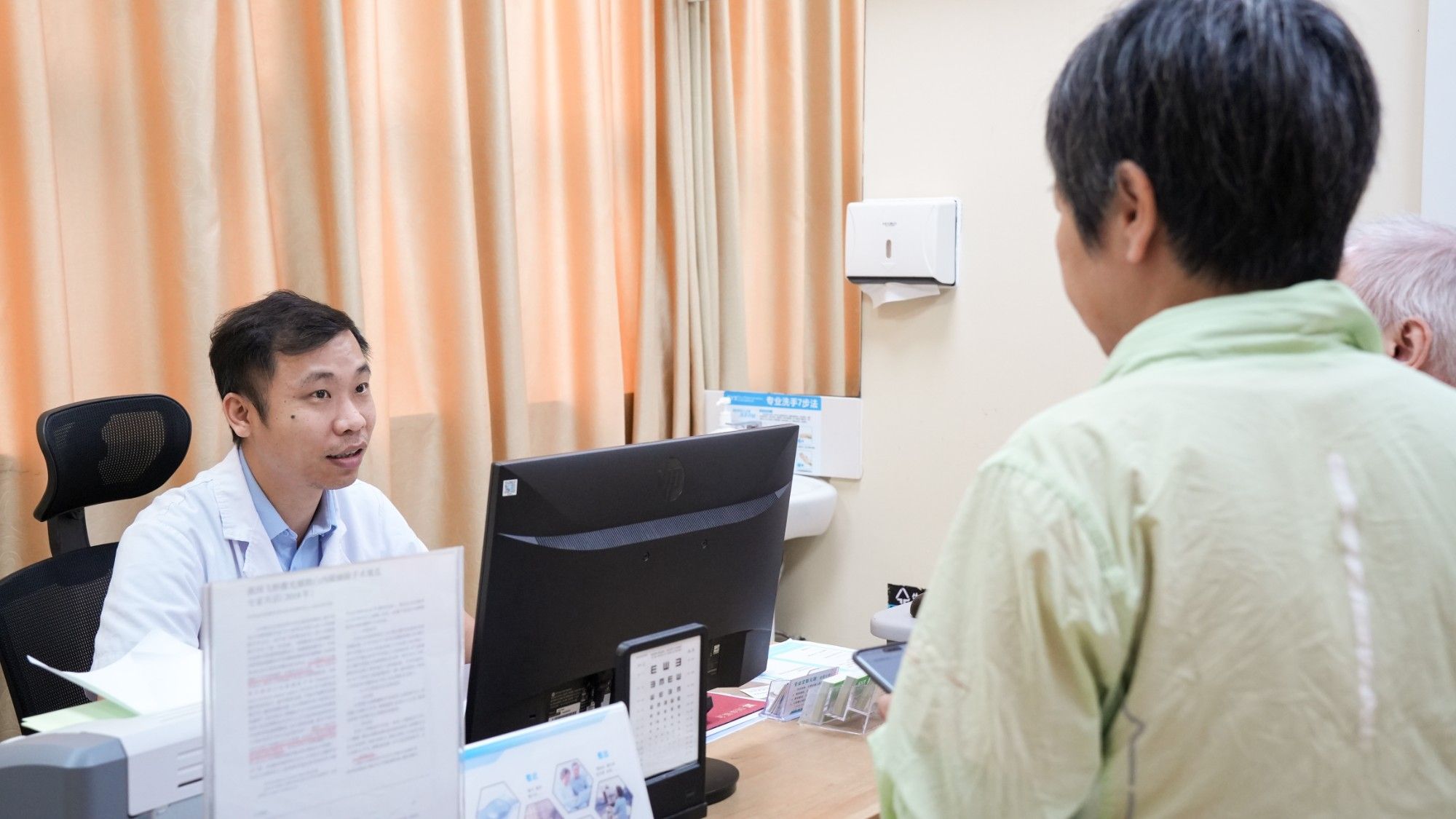
Mr. Mo, 47, has severe myopia of 1,500 diopters in both eyes. Two years ago, he underwent vitrectomy for retinal detachment. Over the past year, his vision has deteriorated rapidly, leaving him seeing everything as if through frosted glass, which has severely disrupted his daily life. In March of this year, Mr. Mo visited Dongguan Aier Eye Hospital. After a thorough examination by Director Liu Fei, he was diagnosed with secondary cataracts following retinal detachment surgery and cataracts following vitrectomy—a condition clinically recognized as a typical and challenging type of “watery eye” cataract.
Due to the complex condition of his eyes and the extremely high surgical risks, several hospitals believed that postoperative vision improvement would be limited and advised against surgery. However, Mr. Mo refused to give up and eventually sought treatment from Director Liu Fei, having heard of his reputation.
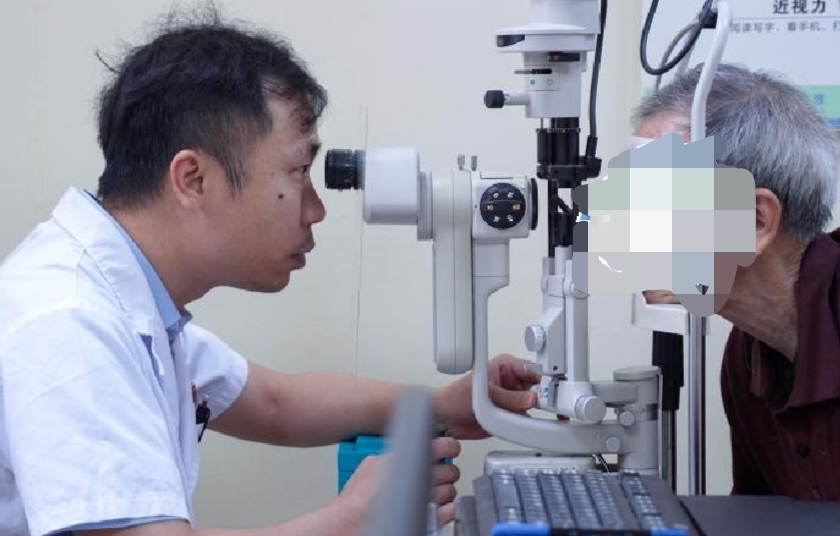
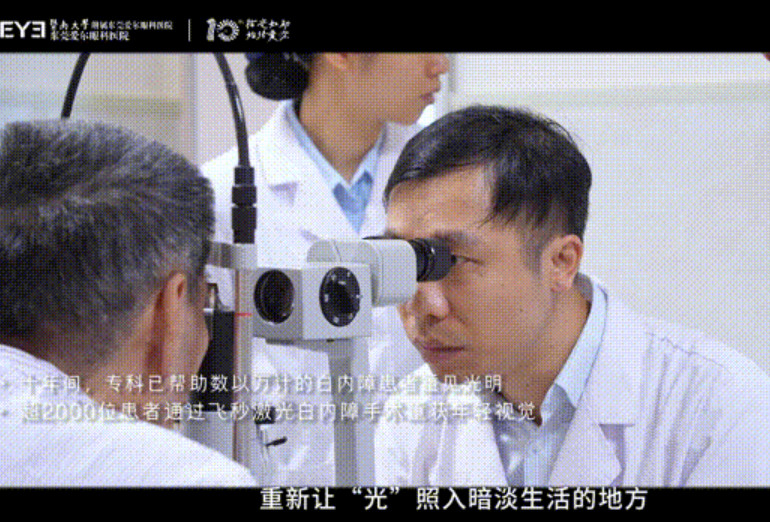
刘斐院长为患者检查眼底情况
What Is “Water Eye”? Why Is Surgery So Difficult?
Approximately 80% of the normal eyeball is filled with a gel-like vitreous humor, which, much like jelly, supports the eye’s shape and maintains stability within the eye. “Water eye,” as the name suggests, occurs when the “jelly” inside the eye is removed and replaced with water. This condition typically occurs in patients who have undergone vitrectomy for severe retinal diseases (such as retinal detachment or diabetic retinopathy). After surgery, the gel-like vitreous is removed and replaced by aqueous humor. Without its original support, the eyeball is prone to collapse, increasing the risk of retinal re-detachment.
When “water eye” combines with cataracts, it becomes the toughest challenge in cataract surgery. Director Liu Fei explained: “In a healthy eye, the lens is located in front of the vitreous and is held in place by the suspensory ligaments, with the vitreous providing support. However, in patients with ultra-high myopia, the suspensory ligaments are already weakened. Combined with the vitreous being replaced by fluid after vitrectomy, the supportive force is significantly reduced. During surgery, the lens can easily dislodge into the fundus; if this occurs, a more complex combined anterior and posterior segment surgery is required, which indeed carries significant risks.” Furthermore, damage to the lens suspensory ligaments from previous vitrectomy, postoperative inflammatory reactions, and damage to the posterior lens capsule all further increase the difficulty and uncertainty of cataract surgery.
Precision-Targeted Treatment: A Personalized Approach Solves the Challenge of “Watery Eye” Surgery
As one of the few experts in China with comprehensive expertise in both anterior and posterior segment eye surgery, Director Liu Fei is highly skilled in three major fields: vitreoretinal surgery, cataract surgery, and refractive correction. Drawing on his profound expertise and extensive clinical experience, he successfully treats a wide range of complex and challenging eye conditions. Faced with the challenging case of “watery eye” cataracts, Director Liu Fei tailored a femtosecond laser cataract surgery specifically for Mr. Mo and incorporated a key innovative technique during the procedure—adding an irrigation channel to maintain anterior chamber stability.
“Without adding an irrigation channel, the anterior chamber would instantly become unfathomably deep; the phrase ‘like standing on the edge of a precipice’ could not be more apt. The lens could slip backward at any moment, and the resulting damage to the suspensory ligament and surgical risks are self-evident.” With his superb technical skills and steady hands, Director Liu Fei skillfully performed the incision and capsulorhexis during the procedure, successfully removing the cloudy lens and implanting a brand-new intraocular lens.
After the surgery, Mr. Mo expressed his excitement, saying, “I am truly fortunate to have met Director Liu!”
术后复查时,莫先生高兴地向刘斐院长展示能清晰看见手机上的字
Director Liu Fei pointed out that patients who have undergone vitrectomy often develop cataracts earlier, experience faster progression, and have harder lens nuclei. If you experience a significant decline in vision or blurred vision some time after surgery, you should promptly visit a specialized ophthalmology hospital for an examination; do not forego treatment simply because of concerns about “high surgical risks.”
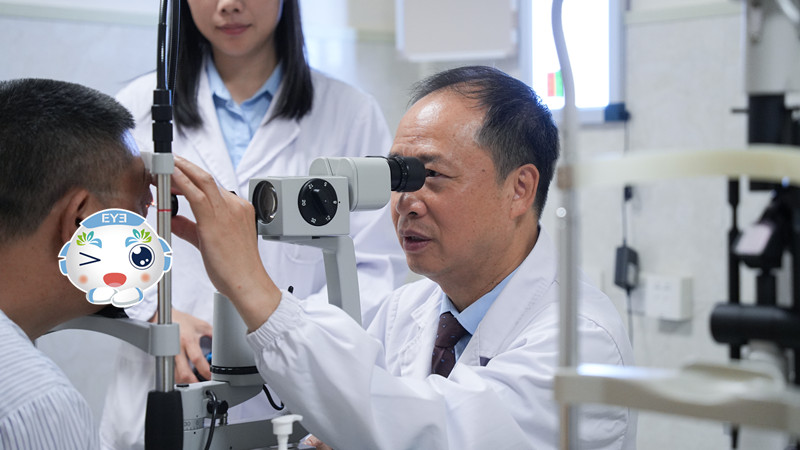
It is reported that as a key clinical specialty in Dongguan, Dongguan Aier Eye Hospital has been dedicated to the field of ophthalmology for the past 11 years since its establishment, featuring a specialized platform for the diagnosis and treatment of complex cataracts and other difficult eye conditions. Led by Director Liu Fei, the expert team leverages their exceptional medical skills to achieve “precise consultations for complex cases, personalized treatment plans, and multidisciplinary collaboration.” They provide tailored treatment solutions for patients with complex eye conditions—such as the elderly, those with complex comorbidities, and individuals with extreme myopia—attracting numerous patients with difficult-to-treat eye conditions from both within and outside the province.

咨询电话:
0769-22660023
医院地址:
东莞市东城区莞樟路石井路段171号-东莞爱尔眼科医院