Dongguan Aier Eye Hospital: One City, Three Hospitals and One Clinic, Part of a Global Network
 0769-22660023 0769-22660023
Many people get nervous just hearing the phrase “eye exam.”
They’re afraid of pain and find the process a hassle.
The main tests for glaucoma include the following four:
There’s no need to feel anxious.
Each of these tests focuses on a different aspect, and only when combined can they provide an accurate assessment of your eye health:
Visual Acuity Test
This is the most basic and straightforward test—it’s the “E” chart we’re all familiar with. The doctor will ask you to stand at a specific distance and identify the smallest letter you can see clearly. This quickly assesses your current visual acuity and helps screen for any vision loss;
Intraocular Pressure Test
A “non-contact tonometer” (commonly known as NCT) is typically used. It doesn’t touch your eye; the device simply blows a gentle puff of air toward your eye to measure intraocular pressure. Elevated intraocular pressure is a major risk factor for glaucoma. This test quickly screens for abnormally high pressure; the process takes only a few seconds and is completely painless. However, it’s important to note that if the NCT indicates elevated pressure, the doctor will typically schedule a “flat-field tonometry” test. This test provides more accurate results, eliminates measurement errors, and further confirms the actual intraocular pressure;
Visual Field Test
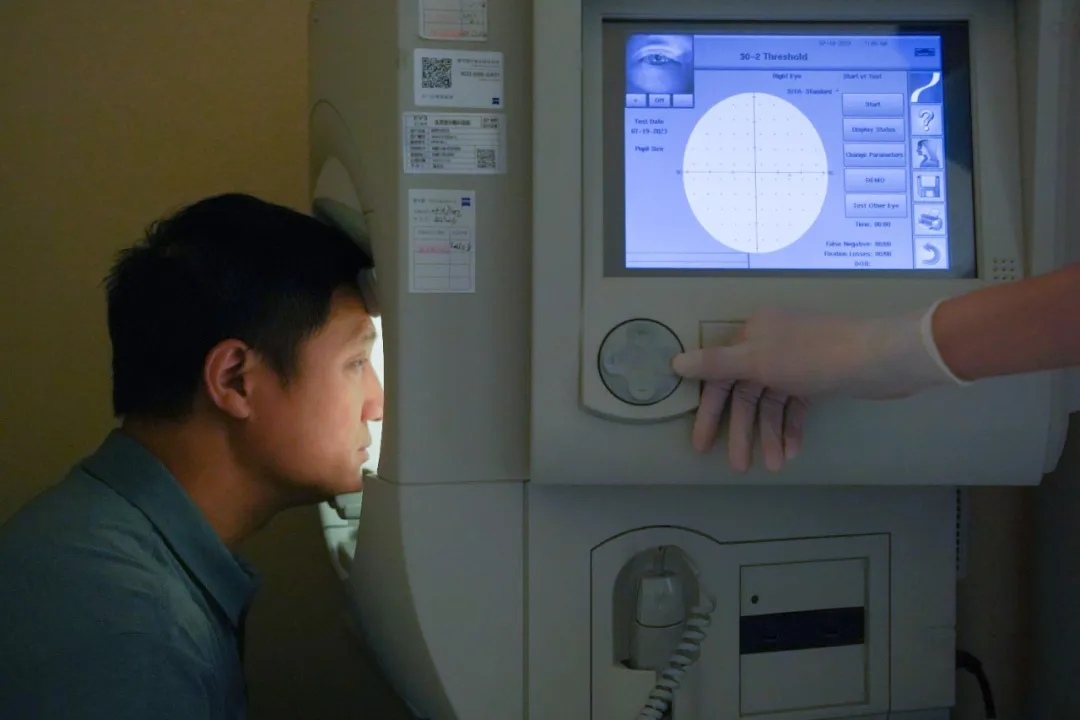
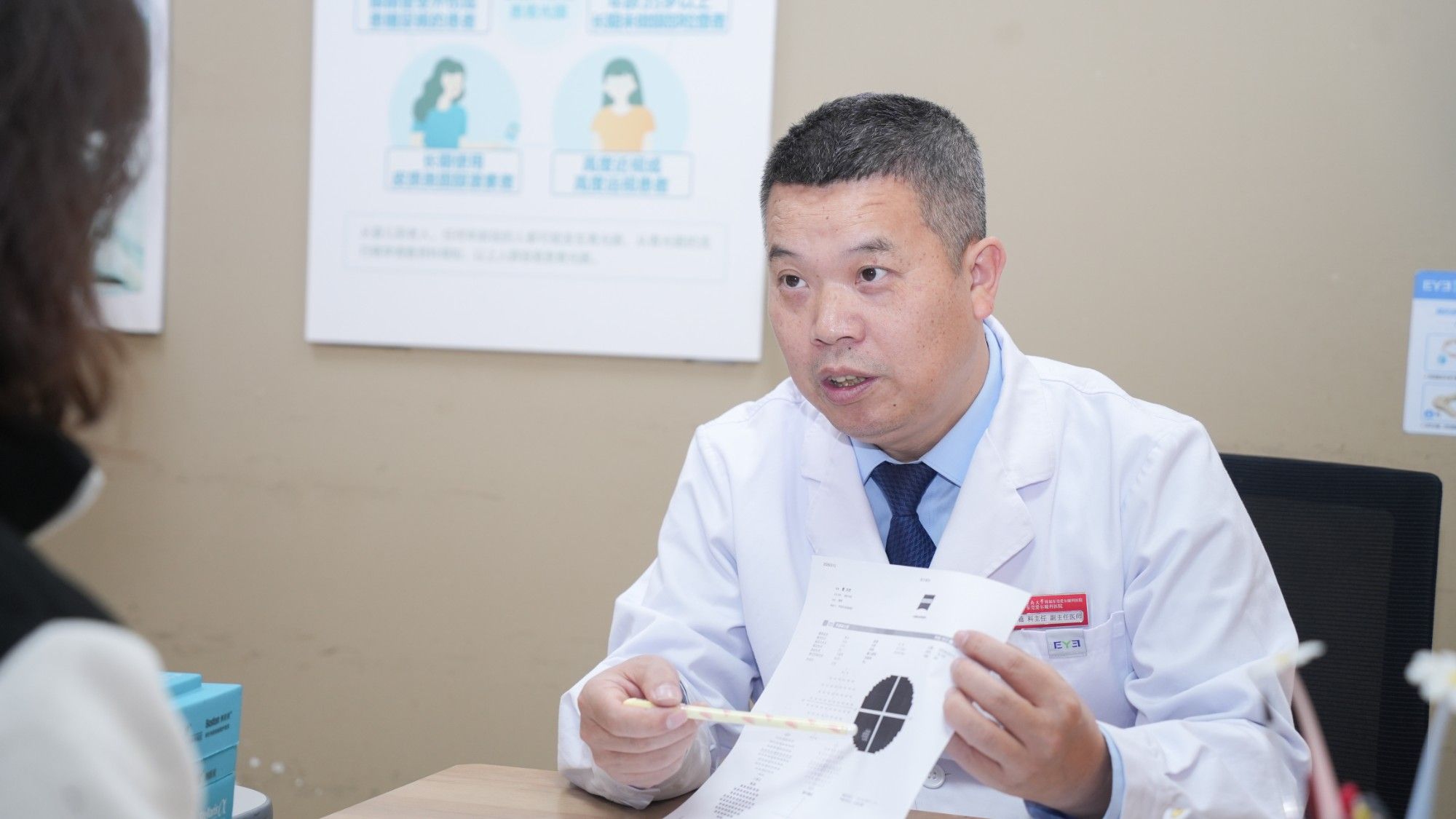
This test specifically assesses your “field of vision”—glaucoma can silently damage your peripheral vision, and while you may not notice it in the early stages, this test can detect it. During the exam, you’ll focus on a fixed point on the instrument and press a button whenever you see a flashing light. The entire process is simple and can accurately identify any visual field defects.
OCT (Optical Coherence Tomography)
This is essentially a “high-definition CT scan” of the optic nerve at the back of the eye, similar to a CT scan of the eye. It clearly reveals the thickness and morphology of the optic nerve and can detect even minor, early-stage damage. It is a “precise tool” for examining the nerve fiber layer. The entire process is painless and non-invasive, taking only a few minutes.
UBM Examination
This stands for Ultrasound Biomicroscopy. It primarily performs a high-definition ultrasound examination of the anterior segment of the eye, providing a clear view of fine structures that are normally difficult to observe, such as the cornea, iris, and anterior chamber angle. It is particularly suitable for determining whether the anterior chamber angle is open, helping doctors distinguish between different types of glaucoma (such as angle-closure versus open-angle glaucoma).
These five tests are the core components of glaucoma screening, and your doctor will tailor a combination of them based on your initial condition.
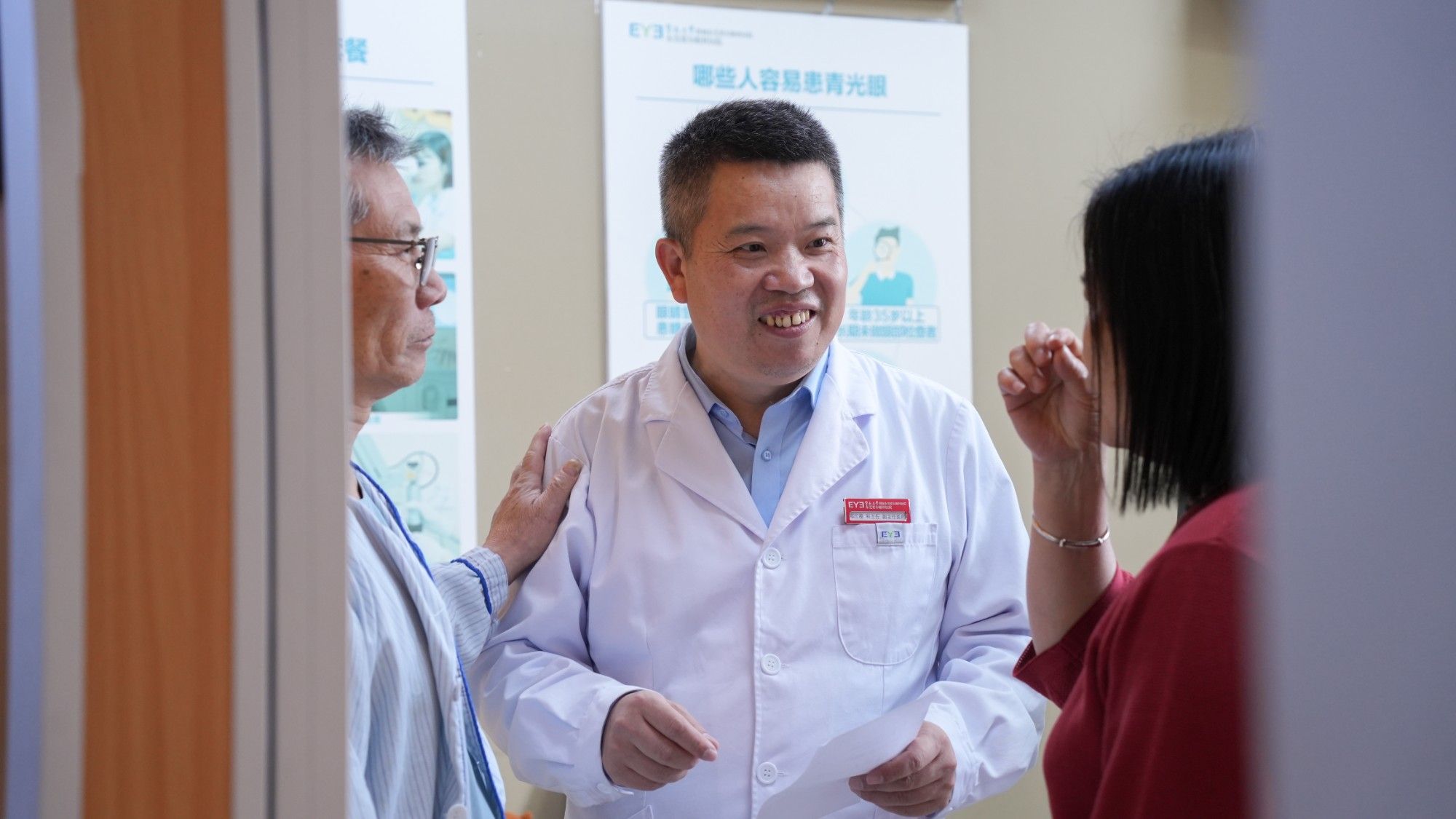
Dr. Deng Jiangwen, Director of the Glaucoma Department at Dongguan Aier Eye Hospital, advises that individuals with the following risk factors should undergo regular glaucoma screenings:
Family History: Having a family member with glaucoma—especially a first-degree relative—significantly increases the risk of developing the disease;
Age: The incidence of glaucoma rises significantly among middle-aged and elderly adults over 40;
High myopia or a history of eye trauma;
Long-term use of corticosteroid eye drops may also trigger glaucoma.
To make it easier for the public to undergo regular checkups, every Wednesday is designated as “Glaucoma Day” at Dongguan Aier Eye Hospital, featuring free specialized glaucoma prevention and screening services. Members of the public in need are welcome to come for consultation and screening.

咨询电话:
0769-22660023
医院地址:
东莞市东城区莞樟路石井路段171号-东莞爱尔眼科医院