Dongguan Aier Eye Hospital: One City, Three Hospitals and One Clinic, Part of a Global Network
 0769-22660023 0769-22660023
In recent years, parents have become increasingly concerned about their children's vision. When problems are detected, they promptly take them to professional institutions for detailed examinations and proper prescription of glasses. However, when it comes to themselves, many adults are much more casual about getting glasses. Wearing the same pair of glasses for years, putting up with scratched lenses and bent, crooked frames, and rushing through the process when getting new ones—this is the norm for many adults.
"Isn't it enough to just see clearly with glasses? Does it need to be so particular?"
"Isn't getting glasses just about measuring the prescription? Why go to a hospital?"
A truly suitable pair of glasses should not only provide clear vision but also ensure eye health, comfort, and a lasting visual experience.
Adults generally experience high visual demand and rarely undergo regular check-ups. Staring at screens for prolonged periods leads to frequent eye strain. Wearing aged or damaged glasses day after day can gradually harm vision health.
Common Misconceptions About Adult Eyeglasses: Do Any Apply to You?
Misconception 1: Vision is stable, so no need for a comprehensive eye exam
Most people believe that their prescription no longer changes in adulthood, so a simple computer refraction is enough, or they even buy glasses directly online.
Standard refraction only gives a rough prescription, ignoring key factors like eye alignment, focusing ability, and binocular balance. This often leads to dizziness, eye discomfort, and increased strain.
Misconception 2: The refraction data is the same as the prescription
Refraction data is just a basic reference. A proper prescription must consider pupil distance, astigmatism axis, personal viewing habits, and binocular vision function. Using only a refraction sheet for glasses often results in incorrect parameters, which can harm eye health over time.
Misconception 3: No need to replace glasses if they aren't damaged
Over time, lenses lose light transmittance and develop coating issues. Bent frames can shift the optical center. Even if your prescription hasn't changed, this can lead to blurry vision and eye fatigue.
It is recommended that adults have their vision checked and glasses replaced every 1–2 years. If lenses are visibly worn, replace them promptly.
How to Choose Lenses
When selecting lenses, don't just focus on price and prescription. Consider your occupation and daily activities to achieve both good looks and eye protection.
For tasks requiring high color and distance accuracy—such as detailed work, driving, or art creation—prioritize clear lenses to avoid color distortion. Avoid dark-tinted lenses while driving, as they can affect distance judgment.
Choose aspheric lenses with multi-layer anti-reflective coating. They offer excellent light transmission, reduce glare, and provide natural, clear vision. Opt for resin lenses, which are lightweight and won't press heavily on the nose even after long wear. For high prescriptions, select high-index lenses, which effectively reduce lens thickness for a better appearance.
Also consider functional lenses as needed: office workers may benefit from blue-blocking, anti-fatigue lenses to relieve eye strain from screens; middle-aged and older adults may find progressive multifocal lenses helpful for seamless switching between near and far vision; for outdoor activities, photochromic lenses are a good choice, as they block UV rays and adapt to changing light conditions.
Unlock "All-Round" Vision – Progressive Multifocal Lenses
Dongguan Aier Eye Hospital – Adult Eyeglasses: "N Reasons" to Choose Us
The correct formula for glasses: Professional comprehensive eye exam + Personalized adjustment = Clear vision + Comfort + Eye health
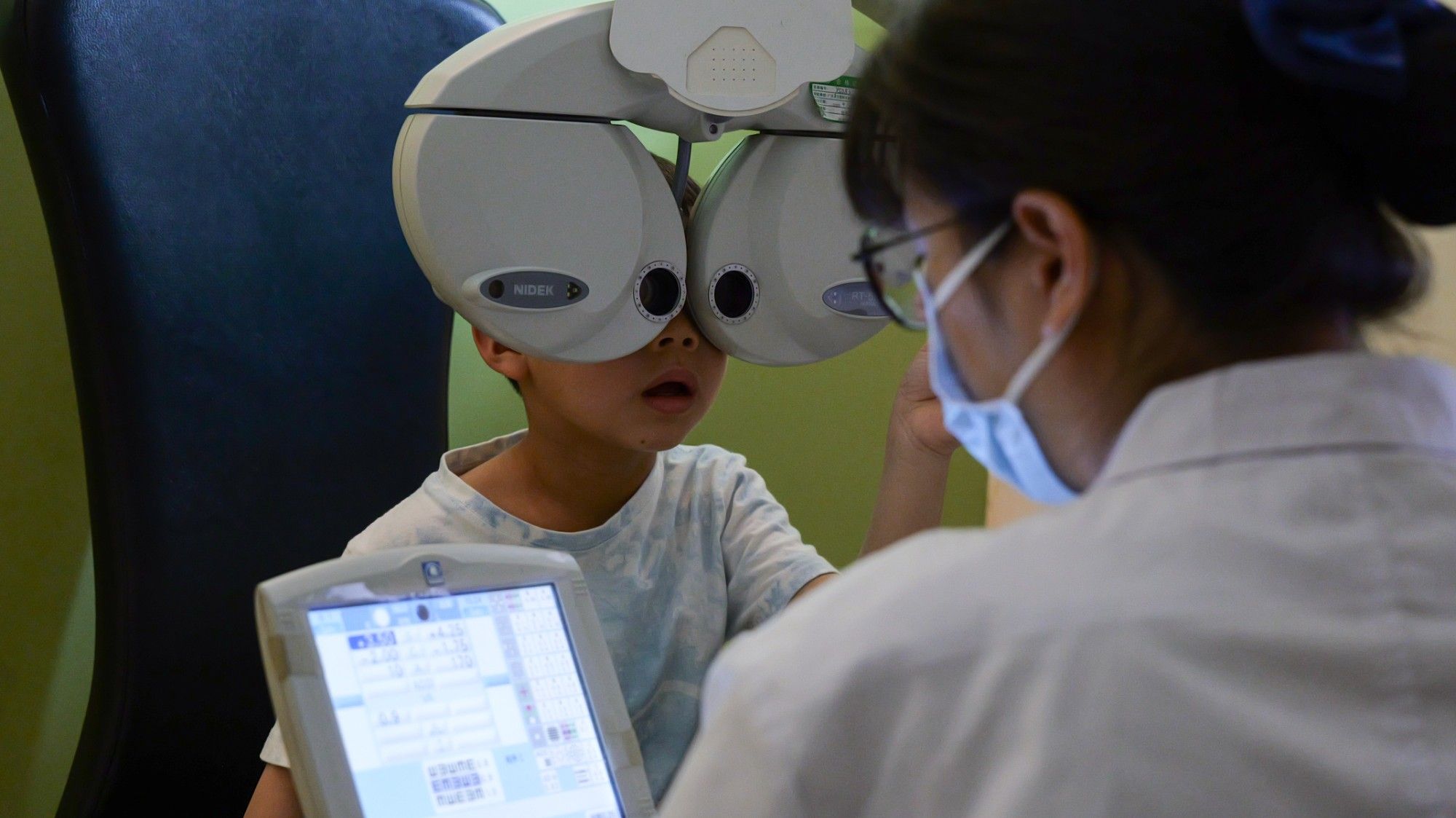
At Dongguan Aier Eye Hospital, we offer a more comfortable environment, smarter equipment, more precise visual examinations, and a more scientific, personalized fitting service. This elevates the eyewear experience for every adult patient to a medical-grade level.
As a tertiary professional eye hospital affiliated with Jinan University, integrating medical care, teaching, and research, our comprehensive departments cover the visual health needs of all ages. Our strong medical foundation ensures a professional standard for adult eyewear, while also allowing for the detection of various eye conditions during the fitting process—achieving both prescription and eye care in one.
Our Optometry and Pediatric Ophthalmology Department, led by Director Fu Chengbin, includes a team of optometry doctors (some with master's or doctoral degrees) and senior optometrists. They specialize in adult comprehensive eye exams, binocular vision function assessment, correction for high myopia and presbyopia, and dispensing functional lenses (anti-fatigue, progressive, driving lenses), with extensive clinical experience.
Our fitting process strictly follows six standard steps, complemented by a full set of clinical examination protocols and multiple quality checks. From initial consultation to custom lens fitting, every parameter and detail is reviewed by dedicated personnel, fundamentally avoiding issues like discomfort or visual deviation.

咨询电话:
0769-22660023
医院地址:
东莞市东城区莞樟路石井路段171号-东莞爱尔眼科医院